Showing posts with label horror. Show all posts

Sunday, 15 November 2015

Aylin by Ayse Kulin / The Memory Box by Margaret Forster / Song Of The Vampire by K M McFarland

Aylin by Ayşe Kulin
My rating: 3 of 5 stars

Buy the ebook from Amazon.co.uk
Buy the paperback from Waterstones

I received a copy of Aylin by Ayse Kulin from its publishers, Amazon Crossing, via NetGalley, in exchange for my honest review.

Aylin is an affluent Turkish woman, brilliant and beautiful, but incapable of finding the happiness she craves in her life. The novel begins with her freak death - murder or accident? - before jumping back to her childhood and adolescence, the moving forward through her life. I found it difficult to really get into the story and never particularly cared about Aylin herself because of the way her tale was told. A leading psychologist, she failed to recognise basic destructive behaviour patterns in herself so the novel is essentially her jumping from one marriage to the next, but with no sense of love or emotion. Supporting characters like her sister and niece came across much more convincingly to me, but I thought the male characters were frequently flat.

I am not sure if the distance I felt from the characters was due to Kulin's storytelling style or whether the translation from Turkish was at fault. Certainly much of the book is set in America which disappointed me as I was hoping to read about Turkey. I was baffled by viewpoint switches such as suddenly finding myself reading the innermost thoughts of a mute nun, and spent most of the book feeling that I had missed the point.

Search Lit Flits for more:
Books by Ayse Kulin / Contemporary fiction / Books from Turkey


Memory BoxThe Memory Box by Margaret Forster
My rating: 4 of 5 stars

Buy the ebook from Amazon.co.uk
Buy the paperback from Waterstones

I discovered author Margaret Forster when I swapped for this book at our Lumburn Court campsite near Tavistock. The Memory Box was in a book box in the shower room!

I was interested to see how Forster would develop her premise of a woman discovering her lost mother some thirty years later, through the contents of a gaudy hat box. Catherine's mother, Susannah, died when she was just six months old. Her father remarried and Catherine had always rejected the idea of her birth mother, instead insisting that her stepmother, Charlotte, fulfilled that maternal role perfectly. Knowing she was dying, Susannah carefully chose, wrapped and boxed eleven items instructing that the box be given to Catherine. However, through various circumstances, Catherine didn't get the said box until after her father, stepmother and grandmother had died too. With a prickly aunt being the only person left who actually knew Susannah, Catherine is left unravelling the myth of her perfectly happy mother's perfect life single-handedly.

The Memory Box is an incredibly introspective and introverted novel which is quite unusual and I thoroughly enjoyed the book. Catherine examines her own life, seeing her choices differently in the light of what she learns about her biological mother. Forster uses her characters to develop a fascinating discussion of motherhood in its many forms and influences. Did Charlotte's constant presence mould the young Catherine to a greater extent than Susannah's genes? Is Catherine's rejection of close friendships and of motherhood for herself a result of her early abandonment?

For me, this novel was a page turner all the way through and I never lost interest in Catherine's quest. Some of her intuitive jumps were too convenient to be believable which why I have only awarded four stars, however overall I very much enjoyed The Memory Box and look forward to discovering more of Forster's work.

Search Lit Flits for more:
Books by Margaret Forster / Women's fiction / Books from England


Song of the VampireSong of the Vampire by K. M. McFarland
My rating: 3 of 5 stars

Buy the ebook from Amazon.co.uk

I received a copy of K M McFarland's vampire trilogy by taking advantage when it was offered for free during the All Hallows Reads Facebook party for Halloween. Song Of The Vampire is the first book in the trilogy and is set in New Orleans, a city I loved when we visited there in Spring 2013. McFarland makes pretty good use of this atmospheric setting and I enjoyed remembering sights such as the St Charles Avenue streetcars and the Mardi Gras bead strings adorning the trees.

Song Of The Vampire is very much a first novel and does have issues with pacing. Some inconsequential scenes are overlong whereas other vital story elements zipped by when much more could have been made of them. I liked the overall story and the untangling of the characters' relationships as each new revelation comes to light. Their dialogue isn't always realistic, especially in mundane conversations, and does go overboard on the lovey-dovey chat - but that might just be my preference! Hopefully, the characterisation will deepen in the next two novels as we discover more about our vampires' lives and world.

Search Lit Flits for more:
Books by K M McFarland / Fantasy fiction / Books from America

Wednesday, 24 June 2015

The Polish Officer by Alan Furst / A Girl Is A Half-Formed Thing by Eimear McBride / Fade To Black by Tim McBain and L T Vargus

The Polish Officer by Alan Furst
My rating: 3 of 5 stars

Buy the ebook from Amazon.co.uk
Buy the paperback from The Book Depository
Buy the paperback from Waterstones

The Polish Officer by Alan Furst was recommended and a copy given to us by our friend Dave Dyke. Set across Second World War Europe, the novel follows the activities of a Polish former-cartographer, Alexander de Milja, who has been recruited into their intelligence services.

I appreciated Furst's detailed descriptions of the towns and cities to which de Milja is sent. The atmosphere often almost crackled with tension and I was interested to read of the beginnings of the war from a non-British viewpoint. I have always been encouraged to believe that Britain leapt into the fray as soon as Poland fell, and it was only the Americans who dithered. It would seem that we weren't exactly quick off the mark ourselves. Furst cleverly includes fascinating minutiae without slowing the pace of his tale - how to locate a wireless operator, why peasant women might be paid to collect rags - which adds to the convincing authenticity and from a historical point of view, I very much enjoyed this book.

My problem with it was our protagonist, de Milja. Most of the other characters are static, while de Milja travels constantly, so we only meet them briefly and I found it difficult to gain much sense of them as real people. De Milja often doesn't know much of their backstory so neither do we. Unfortunately, de Milja doesn't give away much about himself either. In order to succeed in his new career and identities, he needs to be aloof which makes him difficult to empathise with. And the deeper he gets, the more detached he becomes. By the time we get to Russia, I wasn't actually bothered about him at all and had no emotional involvement remaining in the story. As it turned out, this was a good thing because the story just stops, presumably to be continued in a sequel, which is one of my real pet hates! Authors: please write proper endings!


A Girl Is a Half-formed Thing by Eimear McBride
My rating: 5 of 5 stars

Buy the audiobook download from Audible via Amazon.co.uk
Buy the paperback from The Book Depository
Buy the audiobook from Waterstones.

The Bailey's Women's Prize for Fiction 2015 has recently been announced which seemed like the perfect time for me to get around to the 2014 winner, A Girl Is A Half-Formed Thing by Eimear McBride. I have read that it took ages and plenty of refused submissions before McBride found herself a publisher and I can understand that in a way. This is not an easy novel, not in its language or in its subject matter. I think that it is brilliant though!

I downloaded A Girl Is A Half-Formed Thing from Audible as an audiobook and believe that this is the perfect way to experience this book. As I already mentioned, the language is not easy. It is written from the point of view of an unnamed young woman who speaks directly to the reader as though she was actually speaking - confessing or recounting - so there are stops and starts, part sentences, abrupt exclamations - at times it could even be poetry. This all makes perfect sense when actually narrated, especially as my audiobook was narrated by McBride herself, but I think it could be extremely hard work to follow as prose. If my review tempts you to try this book yourself, get spoken word!
McBride sweeps many themes into her work. This is an angry scream of a novel encompassing child abuse, rape, the insanity and hypocrisy of religious fanaticism and the intense pain of losing the person we love most. The central family is fractured and violently dysfunctional, yet keep returning to each other despite the pain and guilt this incurs. McBride has written perhaps the most realistic literary portrayal of a rape I have ever encountered and completely understands the self-destruction of her protagonist. Practically every character is shocking, believably real, and I am sure that A Girl will be a novel I will think back to repeatedly over the coming weeks. It requires effort and emotional strength from its readers (and listeners), but is well worth the time put in. An outrageously powerful book.


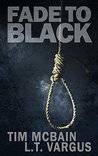
Fade to Black (Awake in the Dark Book 1)Fade to Black by Tim McBain and L T Vargus
My rating: 2 of 5 stars

Buy the ebook from Amazon.co.uk
Buy the paperback from The Book Depository

I have already read one McBain and Vargus novel, Casting Shadows Everywhere, and thought it good enough that, when I saw a box set of their new Awake In The Dark trilogy on sale at 99p as a newsletter promotion, I would give it a try. The first in the trilogy is Fade To Black.

I enjoyed the beginning with its graphic and detailed description of what might be real or might be a bizarre dream as our hero, the implausibly named Jeff Grobnagger, finds himself hanging by his ankle and needing to escape from a hooded murderer. Again. Unfortunately, this is as good as it gets and I struggled to get more from the book. Jeff's backstory is tragic, but only stated and not really explored in his character. He repeatedly tells us he is a loner, yet clings to a new-found friend, Glenn, who doesn't really have a character but seems to exist to explain philosophical ideas to the reader. He makes lots of long speeches!

For a short novella length book, a fair bit of the prose is repetitive, but it's nicely written for an easy read with no indie-curse typos (although chapter 17 is repeated). However, I didn't like the frequent plot holes and several scenes stop rather than end - at one point gunshots are fired through Jeff's windows. Then he arrives at Glenn's house. How did Jeff escape? Weren't the villains waiting for him to exit? Was it just a random drive-by? More attention I think needs to be paid to flow as the pace varies from chapter to chapter and the story often jumps forward with minimal, if any, explanation. Then the whole thing stops, abruptly, and that's the end of Fade To Black.

I am sure that pertinent details are set to be revealed in the rest of the trilogy and beyond into at least a fourth book so far. This is probably why Fade To Black is effectively just a prologue and not a story in its own right. However, I am irritated enough by the assumption that, having started a series, readers will obediently shell out for several books in order to get one complete story, that I probably won't bother reading even the rest of what I already have. Disappointing.


View all my reviews on Stephanie Jane or on Goodreads

Wednesday, 27 May 2015

I Am Legend by Richard Matheson / Luminous Life Of Lilly Aphrodite by Beatrice Colin / Here In Harlem by Walter Dean Myers

I Am LegendI Am Legend by Richard Matheson
My rating: 5 of 5 stars

One of my Favourite Five Horror Stories for Halloween 2015 and one of my Top Ten Books of 2015

Buy the audio download from Audible via Amazon.com / Amazon.co.uk
Buy the paperback from The Book Depository
Buy the paperback from Waterstones

Horror fiction isn't my usual fare, but when I saw a narration of Richard Matheson's I Am Legend in an Audible 2-for-1-credit promotion I thought I would give it a try. Written in the 1950s, the story is a classic and I assumed that, being of that vintage, it would not be as graphically gory as modern tales. In this I was right. There are flashes of horrific violence, but what made I Am Legend brilliant for me is its creeping dread and its overriding sense of loss.

Our protagonist, Robert Neville, believes himself the last non-vampiric human alive and lives an isolated existence boarded up every night in a home besieged by his hunters. My Audible version was narrated by Robertson Dean who does a great job. His world-weary tones perfectly suit Neville's predicament so it was easy for me to get past the unreal element and accept the world as Matheson created it. Set in the then future of 1976, the summer is not especially hot - was it in America or just Europe? - but the library contains actual books and I liked how Matheson has Neville take home volumes to study.

Without, hopefully, giving away too much of the plot for anyone like me who hadn't even seen one of the film adaptations, the flashbacks to Neville's previous family life are sad and reminded me at times of the panic and chaos of Jose Saramago's Blindness. The dog is particularly heartrending and I loved the final twist which is so unlike standard narrative fare that I didn't see it coming. Brilliant storytelling and I'm glad I took a chance on it. I think I will learn how to wire up a generator though - just in case!

Search Lit Flits for more:
Books by Richard Matheson / Horror fiction / Books from America


The Luminous Life Of Lilly AphroditeThe Luminous Life Of Lilly Aphrodite by Beatrice Colin
My rating: 5 of 5 stars

The Luminous Life of Lilly Aphrodite was recommended to us by Dave's daughter Carrie. He bought it for his Kindle account which I can access via Amazon's newish Sharing function for Kindle which is a great idea. This is my seventh review for the Read Scotland Challenge.

Like Midnight's Children, Lilly is born at the beginning of a new era - in her case the beginning of the 20th century. Through her eyes, we see the desperate poverty suffered by many people in Germany in the period from 1900 until the end of the Second World War. Another of my recent reads, Life After Life, touched upon this era and I was interested to learn more about it.

Orphaned very young, Lilly grows up in an orphanage under the care of her beloved Sister August, a Catholic nun. Befriended by an older girl, Hanne, Lilly is encouraged to climb the walls at night, selling roses in seedy bars before she is even ten years old. Hanne is the only other person who does continuously return to Lilly's life, whereas practically everyone else leaves her or she leaves them behind. Despite eventual good fortune, which is revealed through intriguing flash forwards before each chapter, this theme of abandonment and loneliness runs throughout the book and must have been the norm in a time that encompassed not only the two World Wars, but also the Spanish flu epidemic and a civil war, and the complete wiping out of the German currency caused by First World War reparation payments. Although the Nazi Party's actions will always be horrific, novels such as Lilly Aphrodite do allow some understanding of how a people could find themselves choosing such a path.

Beatrice Colin's research, inspired apparently by a great-aunt, was obviously thorough and her efforts pay off. Her prose brings Berlin alive and it is easy to believe in the characters she creates. I love the vivacity of her writing and will certainly be looking out for more based on the strength of Lilly Aphrodite.

Buy the paperback from Waterstones.


Here in Harlem: Poems in Many VoicesHere in Harlem: Poems in Many Voices by Walter Dean Myers
My rating: 3 of 5 stars

I am very happy that the AudioSYNC programme of weekly audiobook downloads is running again this summer. Last year I got the opportunity to hear several books that I might never have heard of otherwise and it looks like that will continue this year. Not all the books are downloadable to the UK so my first two for 2015, actually from Week Three, included Here In Harlem, a poetry collection by Walter Dean Myers.

Myers created his collection by remembering the people he used to live alongside when growing up in Harlem and writing around them. Dozens of people each have a short poem or prose piece allowing us insights into their lives, beliefs, passions and friendships. Women, men, girls and boys, of all ages and occupations all line up to speak and, with the audiobook, thirteen different narrators bring their words to life over appropriate music and sound effects. Whoever added the music certainly did an excellent job as this makes the atmosphere real to the listener.

I found the poems themselves a bit hit and miss. Some had strong characters behind the words, but I couldn't always find the person behind others. Perhaps brevity was at fault because most poems only allow the speaker one minute to project themselves. As a whole though, Here In Harlem gives an interesting overview of the district in its jazzy heyday.

Buy the audio download from Waterstones.


View all my reviews on Goodreads

Wednesday, 5 November 2014

The Rape Of Nanking by Iris Chang / The Alkahest by Honore de Balzac / Half The Sky by Nicholas Kristof and Sheryl WuDunn

The Rape of Nanking: The Forgotten Holocaust of World War II by Iris Chang
My rating: 3 of 5 stars

Buy the audiobook download from Audible via Amazon.comAmazon.co.uk
Buy the paperback from The Book Depository
Buy the paperback from Waterstones

Although not completely unaware of the Japanese invasion of China in the 1930s, I knew very little of the details or the scale of this war. Therefore, when I saw Iris Chang's The Rape of Nanking on Audible, I thought the book would help to fill in some of the gaps in my knowledge. It most certainly does.

The Rape of Nanking is not a book to be taken lightly and is eight hours listening to despicably savage and brutal inhumanity on a truly incredible scale. Anna Fields does an excellent job of the narration and Chang's research was obviously lengthy and thorough to have uncovered such a wealth of detail. I'm sure so much exposure to this level of horror would have turned her mind, even without the harassment she apparently suffered after her book was published.

For me, her most frightening findings are that the events at Nanking, while being perhaps on the largest scale the world has ever seen, are by no means an exclusive result of Japanese culture - a frequent argument I've heard about other WW2 Japanese atrocities. Similar crimes are an all too human failing, as is our ability to remain at a distance and watch rather than instinctively leaping in to protect the victims. I was disappointed but unsurprised by the fact of post-war political shenanigans allowing Japan's government to essentially get away with their actions. Such is the power of money and political paranoia.

I did find it a little odd than the few 'unsung heroes' of Nanking presented by Chang were all white Europeans and Americans. Surely some Chinese must have shown similar bravery? Or perhaps such heroes died before their stories were discovered. I understand that Chang wrote for an American audience, but that gives the book an odd Colonial slant that I found hard to reconcile with her earlier points. Also, I thought the repeated attempts to calculate total numbers were unnecessary and removed me as a listener from the immediacy of the rest of the work. My mind was blown by the initial discussions of between quarter and half a million dead in less than two months. Returning to this numbed me rather than increasing my outrage as presumably was the point.

The Rape of Nanking is a tricky book to evaluate as its subject matter is so horrific and emotive. That it is also still controversial is a bizarre twist. I appreciate Chang's efforts to spread knowledge and open discussions about Nanking. In this, she certainly achieved her aims. However, this is not the strongest written history and, at times, her inexperience shows through. I am sure by now, nearly 20 years later, other historians have taken up her challenge and further titles are out there. I'm not sure that I will be able to cope with returning to the horror in the near future though.

Search Lit Flits for more:
Books by Iris Chang / War books / Books from America


The Alkahest by Honoré de Balzac
My rating: 4 of 5 stars

Buy the paperback from Amazon.comAmazon.co.uk
Buy the paperback from The Book Depository

How I got this book:
Downloaded from ForgottenBooks

I downloaded Balzac's Comedie Humaine novella, The Alkahest, together in a volume with Seraphita, another of his stories. Set in Flemish Belgium, The Alkahest concerns a well-heeled family who are driven to the brink of poverty when the father develops an all-consuming passion for chemistry, specifically alchemy. Perpetually convinced that he is at the threshold of a discovery to bring glory and untold riches to his family, he squanders generations of accumulated wealth and possessions to fund his quest.

Balzac's portrayal of the father, Balthazar, is wonderfully written and convincing throughout. His obsession with science did seem an odd choice to me, but as his behaviour deteriorates, obvious parallels can be seen to drug addictions such as to heroin and I would be interested to know if Balzac had any experience of friends or relatives drawn into addiction because he seems to understand the predicament so well. The actions of Balthazar's wife, Josephine, and eldest daughter, Marguerite, are painful to read but also totally realistic. Initially swept up in his enthusiasm for his project, Josephine schools herself in chemistry in order to understand, but is then repeatedly shattered at being cast aside in favour of the obsession. Marguerite finally gains the strength and financial power to stand between Balthazar and his laboratory, but fails to fully comprehend the insidious hold under which Balthazar exists.

The Alkahest is slow to start and it took me a couple of goes reading the first thirty or so pages before I got into the story proper. Balzac feels he needs to explain the family history and their roots within their community in detail. I got the gist pretty quickly! However, I think it was worth ploughing through all the early description as, once done, the plot continues at at swifter pace and was a good read. Perhaps the repetition of rise and fall of circumstance could have been more tightly edited, but Balzac is not a writer who felt the need to economise on word counts! I was surprised by how relevant The Alkahest is to twenty-first century living and would actually recommend it to a wider readership than Seraphita as it does not mire itself in doctrine and dogma.

Search Lit Flits for more:
Books by Honore De Balzac / Novellas / Books from France


Half the Sky: Turning Oppression into Opportunity for Women WorldwideHalf the Sky: Turning Oppression into Opportunity for Women Worldwide by Nicholas D. Kristof
My rating: 3 of 5 stars

I guess I have come to the Half The Sky book backwards as I have been an active member of Kiva for a couple of years, more recently joining their Half The Sky team as their goals matched my lending history. I was aware of the gist of the book and have now, finally, gotten around to reading it. The lovely people at ESPH, with whom I worked over the summer, gave me an Amazon voucher on leaving and that funded this book's purchase.

I'm not completely sure how I feel about Half The Sky now having read it. Its aims are obviously admirable and by appealing to such a wide audience and being bought in great numbers, its message will reach many people who might previously been unaware of the plight of many of our world's women. However, I felt a bit awkward at the patronising tone in some places. Written primarily for an affluent American audience, there is very much a 'them and us' feel to the writing. Abuses happen 'elsewhere' and the apparent importance and influence of American political decisions to life and death in other sovereign nations is unnerving. It reminded me of the power of the former British empire and of how many of our decisions were catastrophic to those on the receiving end. Also, the emotional manipulation throughout the text is phenomenal! At least the authors are upfront about this. They discuss how experiments have proved that individuals are more likely to donate, and to donate larger sums, to single named individual than to a country or a general appeal. (On reflection, this is also how Kiva works - by putting forward a series of individuals and their stories.) Before and after having made this point, that is exactly what the Half The Sky authors do. Don't expect much in the way of hard facts and figures, but instead there are dozens of anecdotes: stories of first-named women across Asia and Africa who were all horrifically treated, denied medical care, denied education, simply due to their gender. Reading so many tales is a bit like watching the serious bits of Children in Need or Comic Relief. You know you're being manipulated by clever research and editing, but there is a real need too and, by the end, you're pretty punch drunk and overwhelmed.

I am glad I have read Half The Sky. Similarly to The Rape of Nanking, its success is to get the world talking. It has reinforced my commitment to Kiva and I will now also be searching out other deeper books on the topics raised. Suggestions of other titles will be gratefully received.

Search Lit Flits for more:
Books by Nicholas D Kristof and Sheryl WuDunn / Reportage / Books from America

Friday, 8 August 2014

Flotsam by Troy Blackford / Eats, Shoots and Leaves by Lynne Truss / The Scare by Robert Shaw

FlotsamFlotsam by Troy Blackford
My rating: 4 of 5 stars

A Twitter friend mentioned Flotsam this morning and, intrigued, I clicked through, read other reviews and bought the collection straight away. The six short stories are probably best described as dystopian-fantasy-scifi-horror. Pretty genre defying! It's also just 59 pages so easy to devour in one sitting.

The first offering, The Oblong Man, is only a single page so more of a sketched idea than a full story, but the other five are good and, at working out at just 30p each on Kindle, well worth the price! My particular favourites are On Another Level and Three Types Of People.

Thanks for the tip @HeatherDorcas


The ScareThe Scare by Robert Shaw
My rating: 3 of 5 stars

The Scare is an American high school horror tale with an interesting mix of contemporary and gothic settings. It does get gory and very sexual so unsuitable for younger teens. The characters are well drawn considering how many there are and, although a misogynistic boys-protecting-girls theme keeps recurring, the female characters are allowed to do more than just pout, scream and die! I particularly liked Shaw's descriptions and imagery. His story is not stunningly original, but makes for an entertaining escapist read.

This book was recommended to me on Twitter back in May and I've unfortunately forgotten who by. If you happen to read this review, please make yourself known - I like your taste in fiction!

View all my reviews


Saturday, 14 June 2014

Review: Monarchy by David Starkey / The Unknown Terrorist by Richard Flanagan

Monarchy: from the Middle Ages to Modernity by David Starkey
My rating: 3 of 5 stars

Buy the ebook from Amazon.co.uk

I registered a book at BookCrossing.com!

I remember reading Monarchy when it first was published and it is cram packed with information. However, there is so much that this second reading seven years later felt like a new book.

I like David Starkey's writing style which is often drily humorous. Having recently also read his book solely about Elizabeth I, much of the early section was familiar. However, he gives plenty of space to the shorter reigned monarchs and I was very interested in how much of the 'divine' hereditary succession was actually the result of political wrangling behind the scenes. The seemingly incessant violent disputes between the opposing Christian factions of Catholics and Protestants was in some respects hard to fathom - they're all supposed to be the same overall faith aren't they?!

As non-fiction books of this topic go, Monarchy is far more accessible than many and, as an overview or to inspire more in depth study, I'd recommend the read. 


The Unknown Terrorist by Richard Flanagan
My rating: 3 of 5 stars

One of my WorldReads from Australia

Buy the ebook from Amazon.co.uk
Buy the paperback from The Book Depository
Buy the paperback from Waterstones

The Unknown Terrorist is a fairly standard thriller which employs the mass media and an unscrupulous journalist as its evil. Our supposed heroine, Gina, also named throughout as The Doll, is hounded to madness over the period of just a few days by drummed up hysteria and the cynical machinations of anonymous powerful men in suits.

I was interested in the descriptions of Sydney, having never been to Australia. However, Flanagan's vision of the city is hardly tourist friendly! I liked his frequent mentions of the various immigrant populations, showing a country made up of many layers of cultures, much like Britain, and the way this was set against rampant hostility towards Muslims was also sadly familiar as this attitude is also widespread over here. The main characters never leapt from the page for me though which made it difficult for me to really invest in their story.

I'm not sure this book had decided what it wanted to be. It doesn't have the pace-at-all-costs approach of slick American thrillers, but the occasions where it tries for literary fiction fail too because of their isolation. My audio version was nicely narrated and passed a week of bus journeys, but I had hoped for a deeper novel and was ultimately a bit disappointed.


View all my reviews on Stephanie Jane or on Goodreads

Sunday, 8 June 2014

Trying out the new tow bar and failing to walk

Eastbourne and Wealden Walking Festival flyer 
In spite, or perhaps because, of the fabulously hot sunshine today, we completely failed to go for a walk this afternoon. We meant too, but somehow the prospect of lazing in the garden with a good book was far more enticing. I can't imagine why! Dave's now gripped by Precious Thing by Colette McBeth, the thriller I reviewed a while ago, and I tore through Niedermayer and Hart by M J Johnson, a supernatural thriller that I discovered via Twitter. (Full review coming in a few days.)

But while we're not talking about walking, the photo illustrating this post is of a cute card boot flyer advertising Eastbourne and Wealden's Walking Festival at the end of September. There was a bag of them on the noticeboard at work. It's going to be a nine day extravaganza of all things stroll related so make sure you get into training now! I'm pretty sure Dave and I will be long gone by then which is a shame, but we'll be walking in solidarity in Spain, I'm sure!

Yesterday we went to visit Bailey who looked a bit sorry for himself. However, after we'd borrowed the water hose and got out the car shampoo, he was almost as shiny as new. We also hitched up to the new tow bar on the new car to make sure all that works ok. It's a swan neck this time so a bit different but still simple enough to negotiate. EuroTow did a good job - again. Hopefully we won't keep visiting them every year though. Other new toys we tried out were both gas related - a Gaslow connector with a gauge for the Calor gas bottles and a proper fitting for the big Spanish gas bottle so we can now actually use it. Woo hoo!

Current +eBay auctions that might interest you include fishing gear, a tall bookcase and two big books about the Second World War. Auction ticker thing at the end of the post - it's all got to go eventually.